
Why the Smartest Founders Run Their Team Lunches Through a South Indian Restaurant
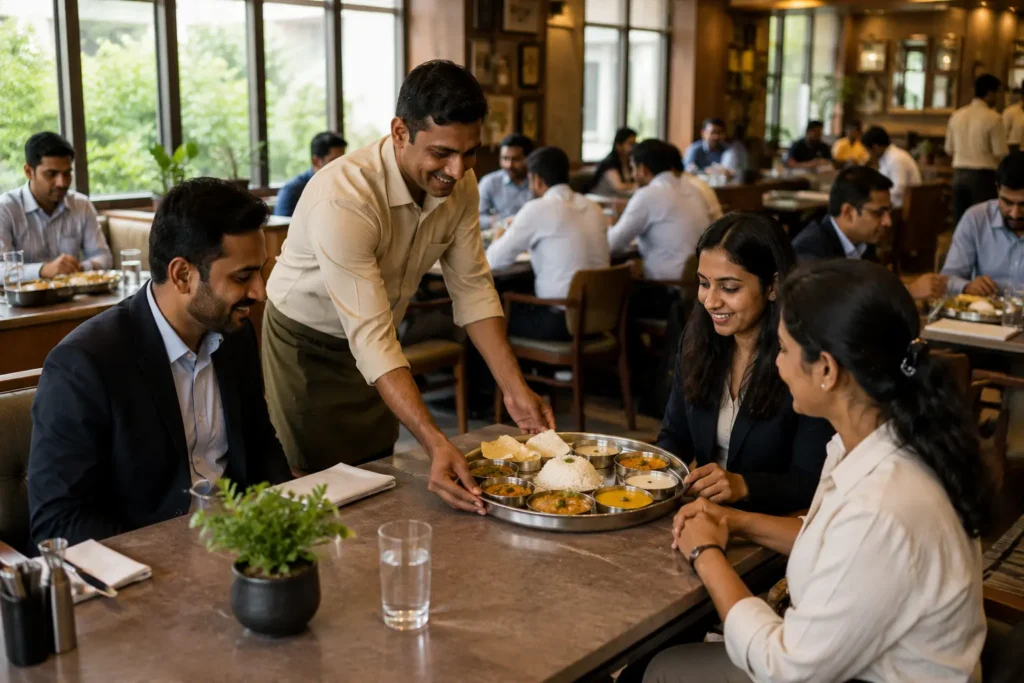
A South Indian restaurant gets your team fed, your investor call debriefed, and your afternoon sprint back on track in under 40 minutes — no other lunch option in most startup hubs comes close.
Speed: The South Indian Restaurant Service Model Was Built for People Who Bill Their Time
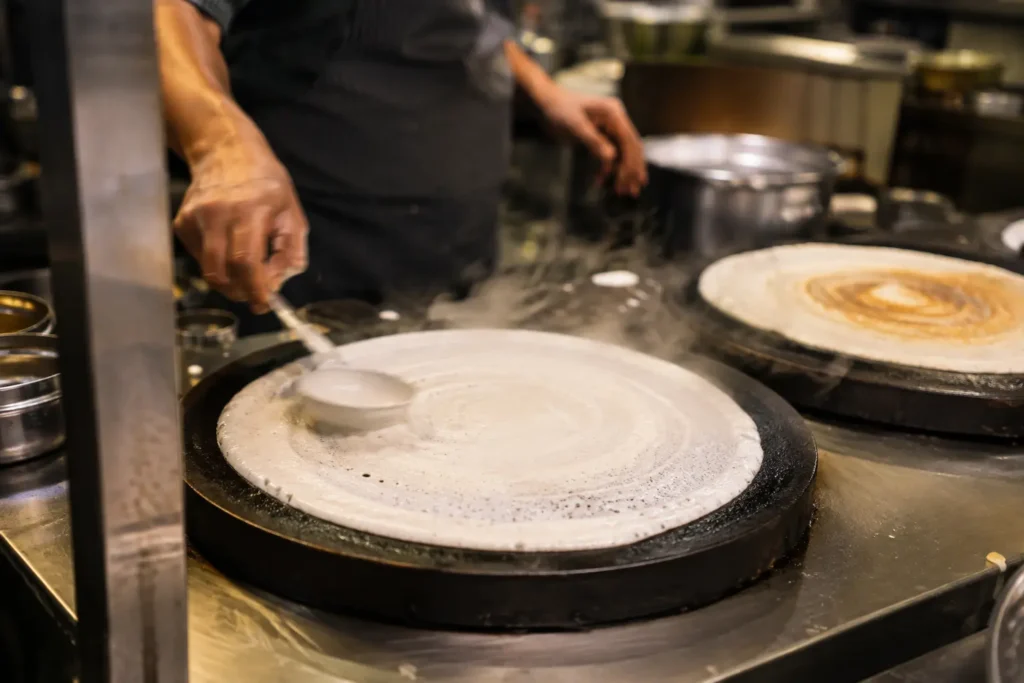
Founders don’t lose deals because the food is bad. They lose momentum because lunch eats ninety minutes instead of thirty. A South Indian restaurant solves this at the kitchen level, not the marketing level. Dishes like dosa, idli, and uttapam cook on a flat griddle in front of the customer, which means ticket times run shorter than almost any cuisine that requires a full stove-and-oven line. Thali and meal-tray formats — a full plate with five or six items served at once — remove the multi-course wait entirely. You order once, everything arrives together, and the table turns fast.
For a Series A team running standups, investor syncs, and hiring loops back to back, that difference compounds. A twelve-person engineering team eating at a slow-turn restaurant loses roughly an hour of collective focus time per week just sitting and waiting. Route that same team through a South Indian restaurant with a thali or combo-plate model, and the wait drops close to zero — the kitchen batches identical plates, and service becomes closer to a cafeteria line than a sit-down restaurant.
ROI: What a South Indian Restaurant Actually Saves on the P&L
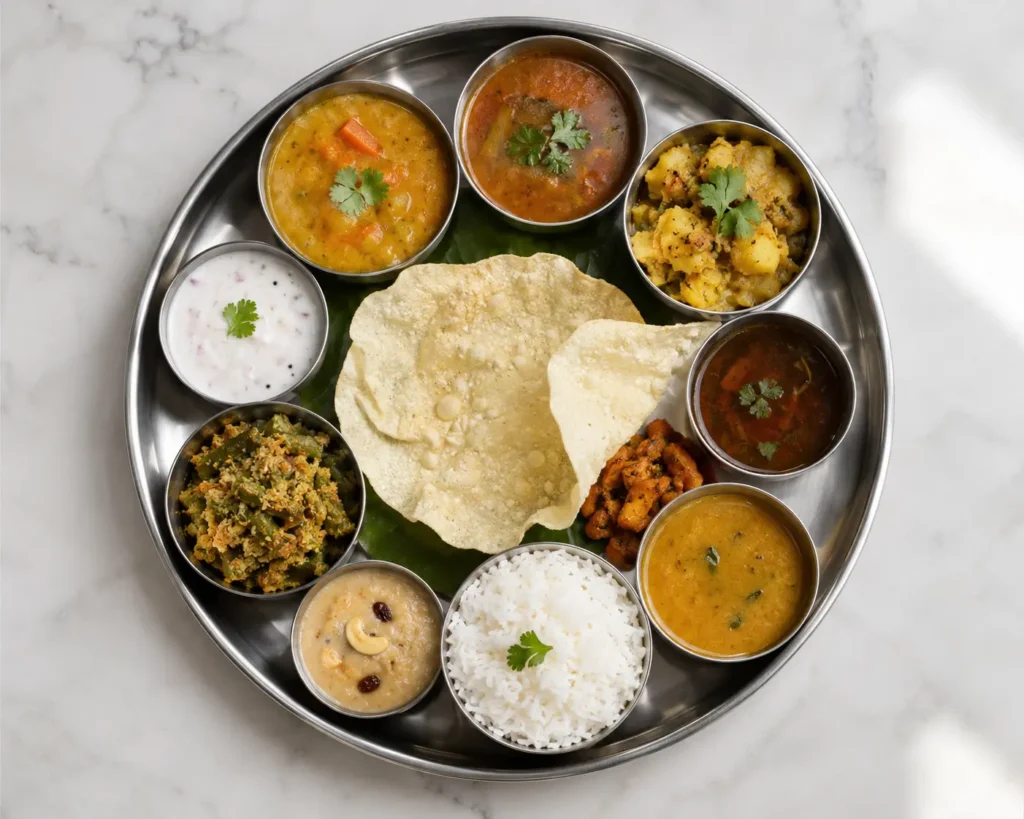
Founders track burn rate obsessively, and food spend is a real line item once a team crosses fifteen people. A South Indian restaurant menu runs on rice, lentils, coconut, and vegetables — ingredients with lower per-plate cost than a steakhouse or a sushi counter — and that cost structure shows up directly in the check. A full thali typically prices well below a comparable multi-course meal at a Western restaurant of similar quality, which means a founder can host a twenty-person team lunch or a ten-person investor dinner at a materially lower spend without downgrading the experience.
There’s a second ROI lever most founders miss: dietary flexibility. A large share of South Indian menus are vegetarian by default, with dedicated vegan and gluten-free options built in rather than bolted on. That matters when your team includes engineers on elimination diets, investors with religious dietary restrictions, or candidates who don’t eat meat. Instead of calling three restaurants to find one that can accommodate everyone, a founder picks one South Indian restaurant and solves the entire dietary-constraint problem in a single reservation.
A Real Example: How One Bangalore Team Used a South Indian Restaurant to Close an Onboarding Loop
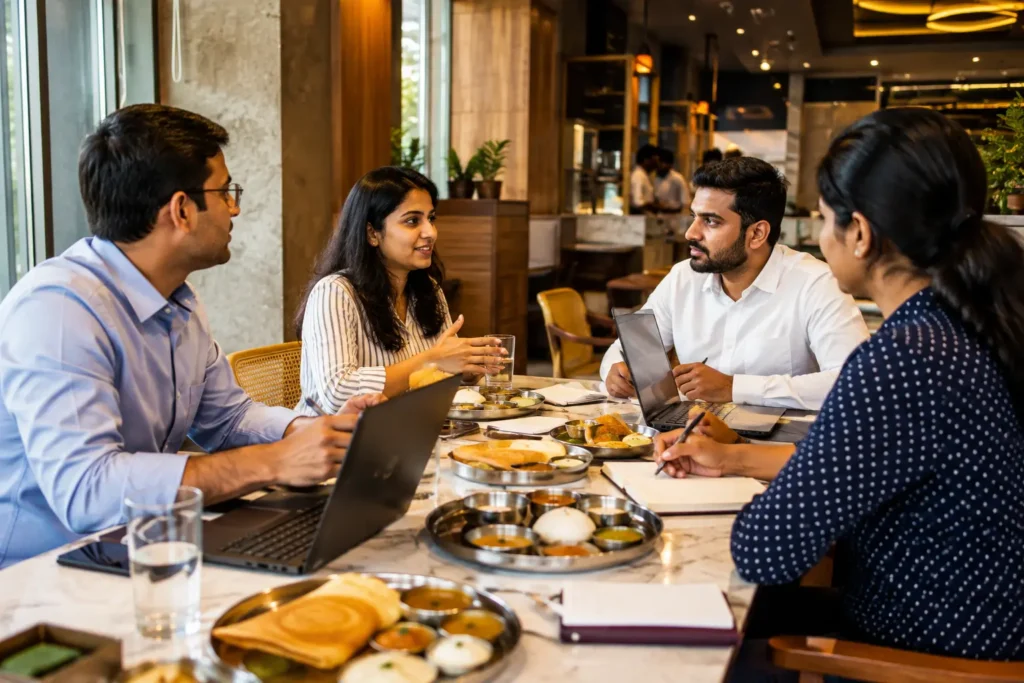
A twenty-person Series A team in Bangalore was running back-to-back investor meetings during a fundraising week and needed a lunch venue that wouldn’t blow a two-hour hole in the schedule. The founder booked a nearby South Indian restaurant known for a fixed-price thali service and pre-ordered the meal for a set arrival time. The kitchen had every plate ready when the group walked in. The team ate, the investor conversation continued at the table, and the group was back in the office in under fifty minutes — short enough that the afternoon’s second meeting started on time.
That’s not an isolated case. Startup hubs with dense South Indian restaurant coverage — Bangalore, Chennai, Hyderabad, and increasingly the Bay Area and parts of the UK — see founders repeat this pattern because it works twice: once on speed, once on cost. The restaurant becomes a default meeting venue the same way a specific coffee shop becomes a default one-on-one spot, because the operational friction is lower than anywhere else on the block.
Why a South Indian Restaurant Menu Matches a Founder’s Actual Schedule
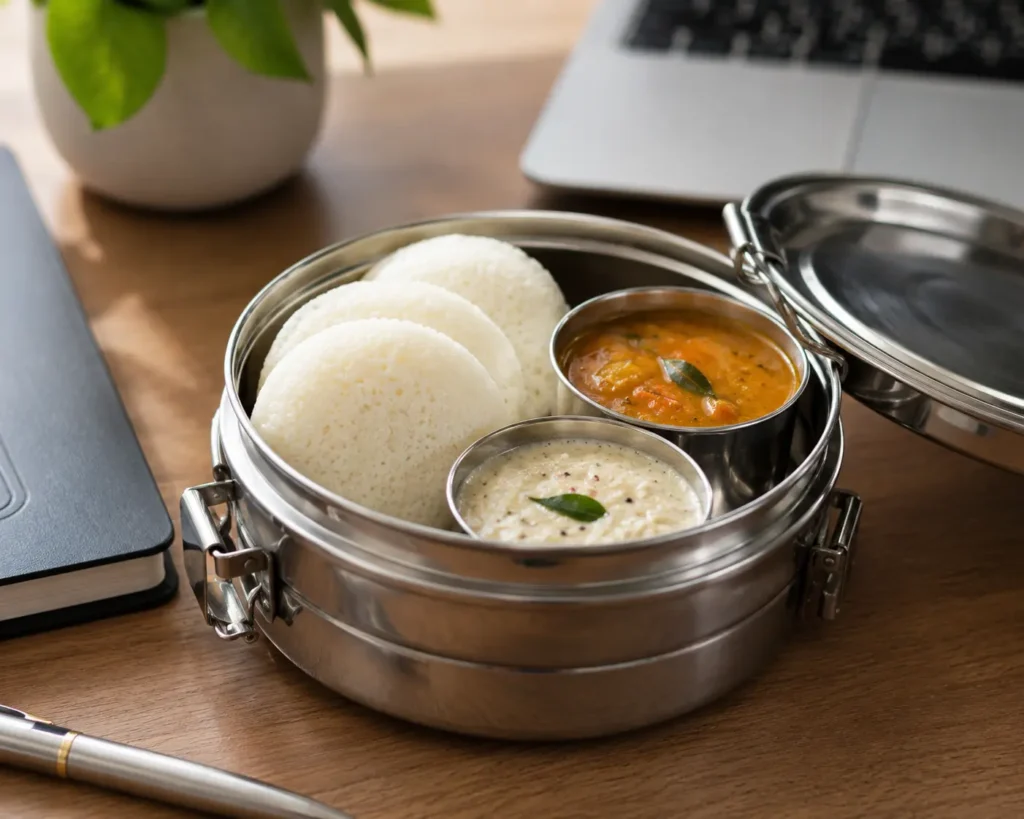
Founders don’t eat on a leisurely three-meal clock. They eat between calls, before a flight, or right after a board meeting runs long. A South Indian restaurant menu is structurally suited to that rhythm in a way most cuisines aren’t. Breakfast items — idli, dosa, upma — are served all day at most locations, so a founder walking in at 4 p.m. after a delayed flight still gets a full, fast meal instead of a truncated late-lunch menu.
Portion sizes on items like idli and vada are small and modular, so a solo founder grabbing a quick bite between calls can order two or three items and be done in fifteen minutes, while a full team can order thalis and eat at a slower pace without the kitchen needing two different service tracks.
The format also travels well into hybrid work culture. A South Indian restaurant’s tiffin-style packaging — stainless steel carriers or compartmentalized containers — was designed for takeout and transport long before “meal delivery” was a startup category. That means a founder can order for a remote team member joining in person for one day, or ship lunch to a satellite office, without the food arriving soggy or separated the way a lot of Western entrees do after a thirty-minute drive.
None of this requires a founder to become a food-industry expert. It requires recognizing that a South Indian restaurant’s operating model — fast griddle cooking, batch-served thalis, built-in dietary coverage, all-day menu availability — happens to match the constraints a Series A team actually runs under: tight schedules, real budgets, and a roster of people with different dietary needs. That’s not a coincidence worth ignoring, and it’s not a marketing angle either — it’s a kitchen design that predates the startup schedule it now happens to fit.
Founders don’t need another lunch vendor pitch deck; they need a venue that gets out of the way. A South Indian restaurant does exactly that, and the teams already using one aren’t going back.
Resources
1.South Indian Food & Cuisinehttps://www.southindiatour.org/about-south-india/food-cuisine.html?utm_source=chatgpt.com
2.South Indian Disheshttps://www.prod.incredibleindia.gov.in/content/incredible-india-v2/en/destinations/chennai/food-and-cuisine/south-indian-dishes.html?utm_source=chatgpt.com