
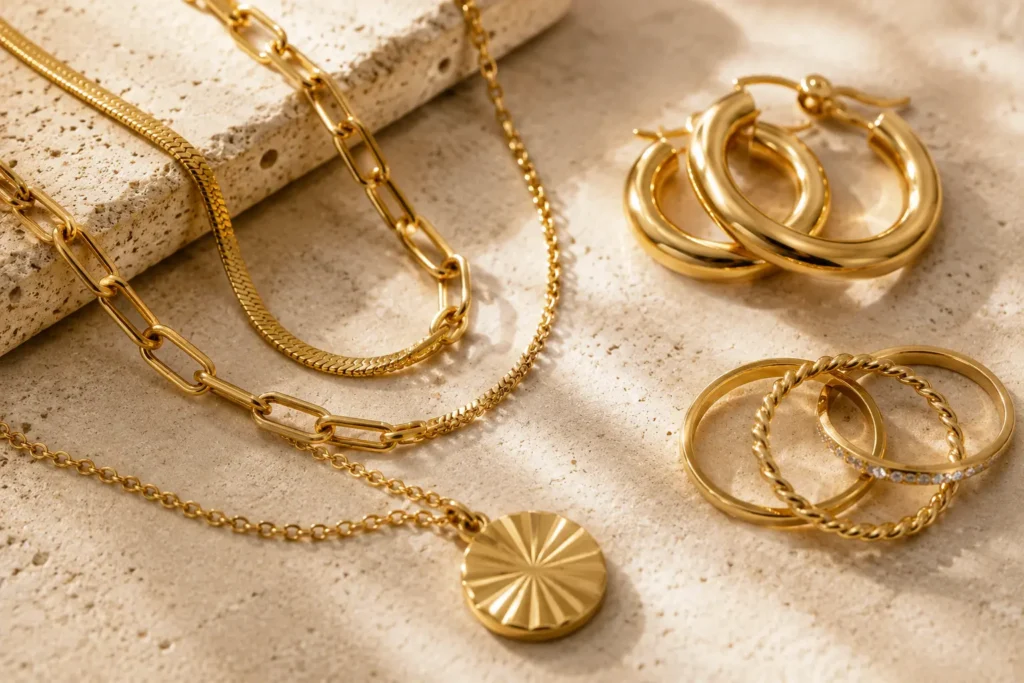
Gold Plated Jewellery Gives You Fine-Jewellery Margins Without Fine-Jewellery Capital Risk
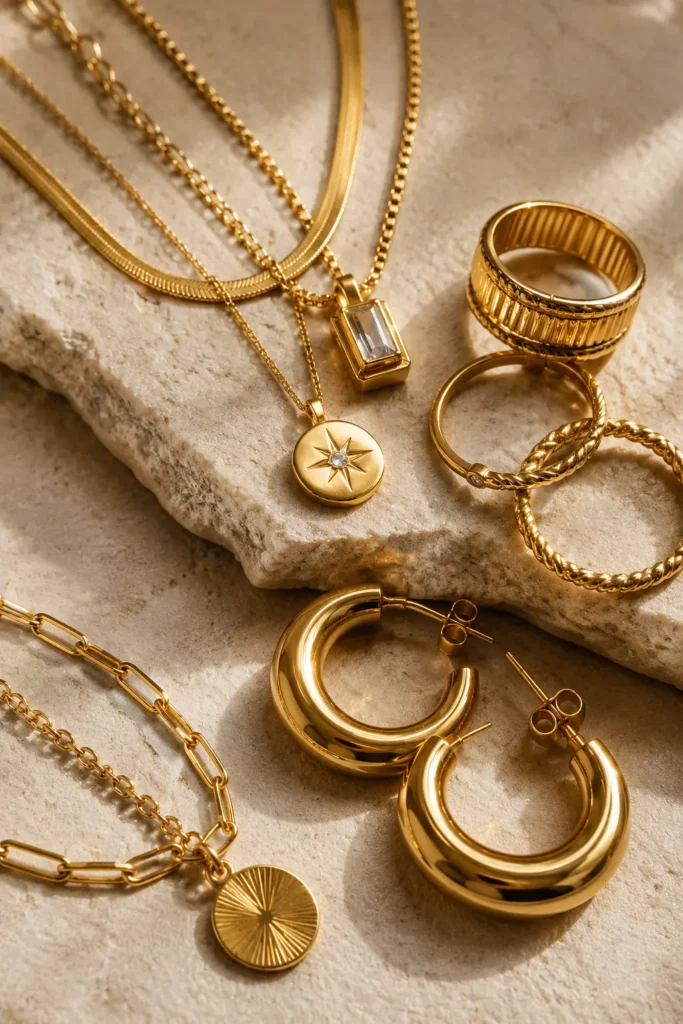
Gold plated jewellery lets a Series A brand sell a product that looks and photographs like solid gold while carrying a fraction of the material cost, the working capital risk, and the pricing volatility that real gold demands.
The Margin Math Outperforms Solid Gold and Costume Metal Alike
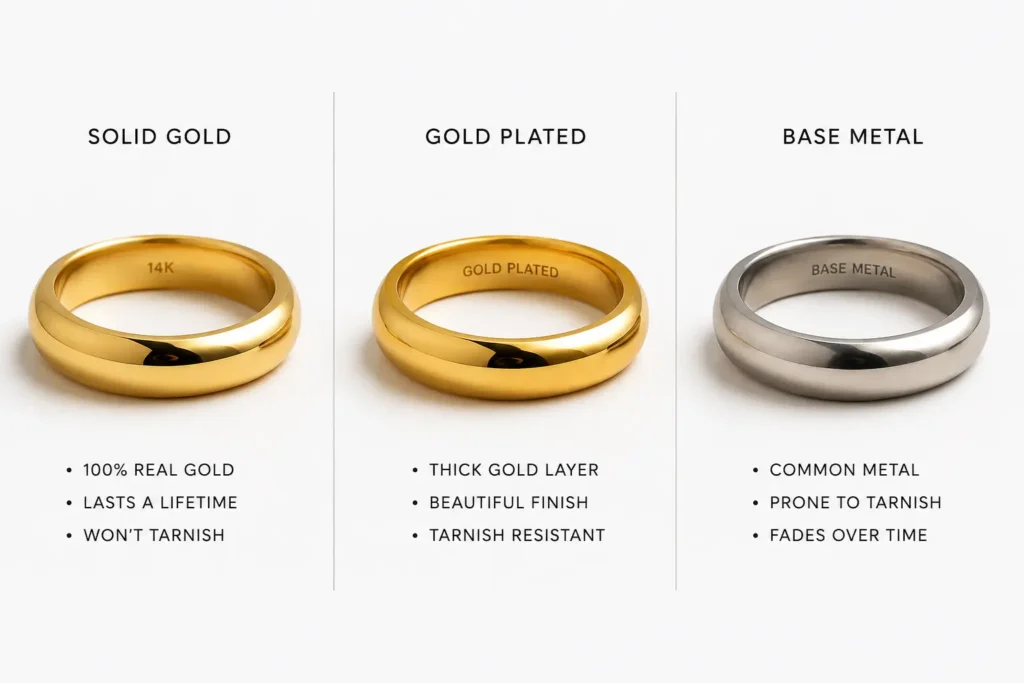
Founders who look at jewellery as a category usually get stuck choosing between two bad options: solid gold, which ties up serious working capital in a commodity that swings in price daily, or raw costume metal, which looks cheap under a phone camera and depresses average order value. Gold plated jewellery sits in the middle and wins on both fronts. A base of brass or sterling silver takes a thin layer of real gold through electroplating, so the finished piece reads as gold in every photo, every unboxing video, and every in-person interaction, while the actual gold content stays measured in microns rather than grams.
That means your cost of goods stays anchored to a stable base metal price instead of tracking the spot price of gold, and your margin doesn’t erode every time gold rallies. Brands like Mejuri and Kendra Scott built scaled catalogs on gold plated jewellery as the entry price tier precisely because it lets them hit a premium look at a margin structure that solid gold could never support at volume.
Compare that to the alternative categories a technical founder might shortlist instead. Solid gold jewellery requires locking capital into raw material months before you’ve sold a single unit, and that capital is exposed to a commodity market you don’t control. Unplated base-metal jewellery avoids that exposure but caps your price point low, because customers can tell the difference the moment the finish starts to look dull. Gold plated jewellery is the only option that lets you price toward the premium end of the market without carrying the balance-sheet risk that comes with premium raw materials.
This distinction matters even more at the pricing-strategy level. A founder pricing a solid gold line has to build in a buffer for commodity price swings, which means the retail price either moves with the market or the margin absorbs the volatility — neither is a comfortable position for a growth-stage company trying to hold a consistent price point across a paid acquisition campaign. Gold plated jewellery removes that volatility from the pricing conversation entirely, letting a founder set a retail price based on brand positioning and customer willingness to pay rather than the daily commodities market.
It Converts Better Because It Photographs Like a Premium Product
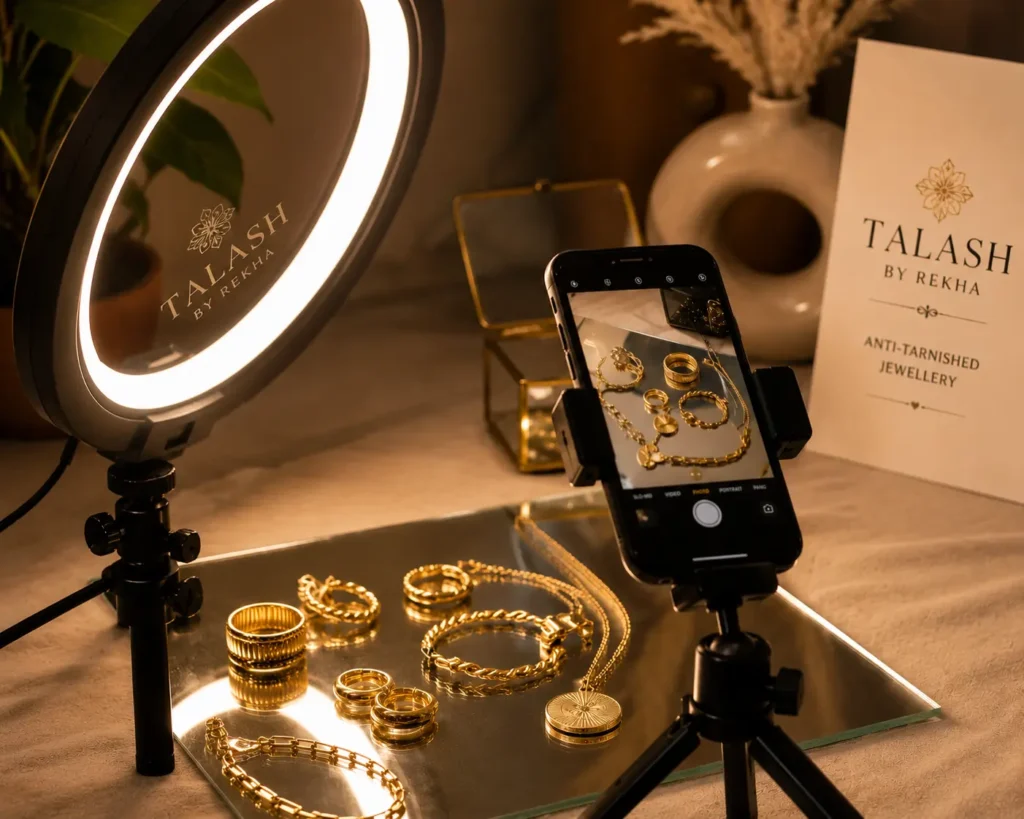
A technical founder thinking about paid acquisition cares about one thing above almost everything else: how well the creative converts. Gold plated jewellery has an inherent advantage here, because plated gold reflects light and photographs with the same warm, high-contrast shine as solid gold, which means your product images and video ads look premium without a premium production budget. That visual quality directly affects click-through rate and conversion rate on paid social, where a duller unplated piece simply reads as cheaper and gets scrolled past. Pura Vida and BaubleBar both leaned on gold plated jewellery as their hero SKUs for exactly this reason — the finish does creative work for you before a copywriter or designer ever touches the ad.
This matters for your growth loop specifically. If your creative already looks premium at the raw asset level, your team spends less time and budget on post-production polish to make a product image convert. That’s a direct, measurable line item on your paid acquisition spend, and it compounds every time you launch a new gold plated jewellery SKU, because you’re reusing the same lighting and photography setup instead of reinventing it for every product drop.
Durability and Repeat Purchase Work in Your Favor, Not Against It
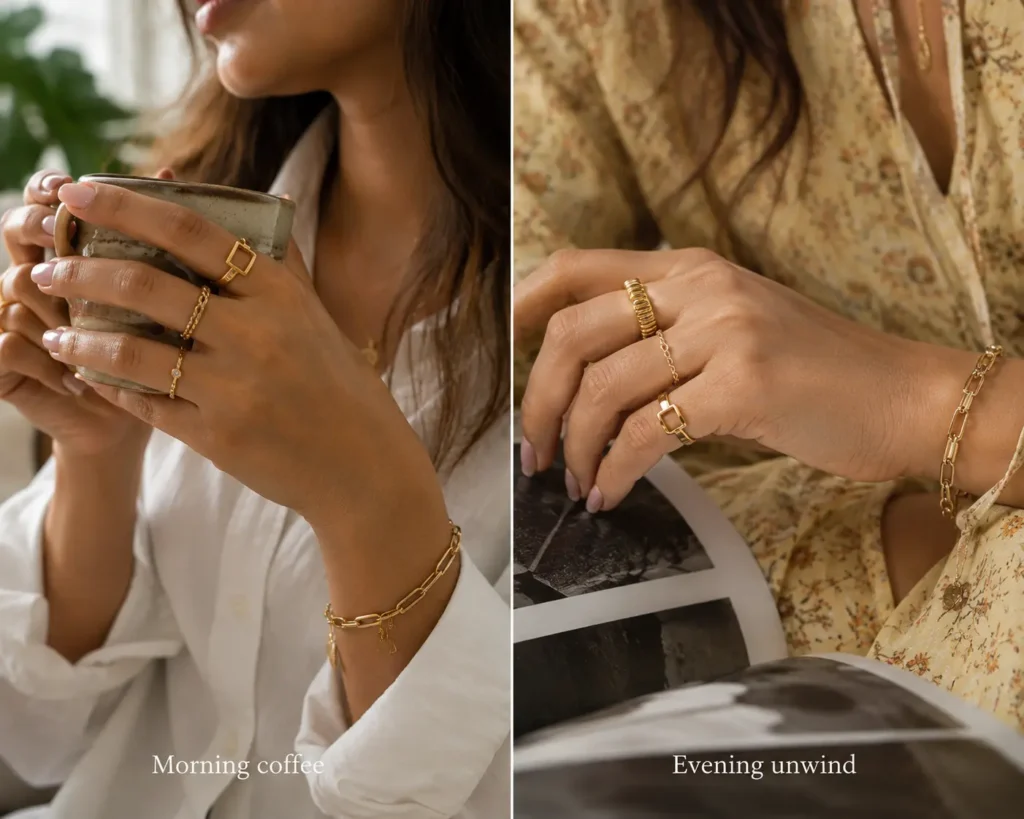
Founders sometimes assume plating is a weakness — that a thin gold layer will wear off and generate returns and refunds. In practice, that “weakness” is what drives repeat purchase in gold plated jewellery, and repeat purchase is the metric a Series A founder should actually be optimizing for.
A well-made piece with proper base metal and plating thickness holds its finish through normal daily wear for a meaningful stretch of time, and when the plating eventually does fade, the customer doesn’t churn — they come back and buy another piece in the same style or a new one entirely. That’s a naturally recurring purchase cycle built into the product itself, something a solid gold piece, designed to last a lifetime, will never generate.
A technical founder who understands recurring revenue models from SaaS will recognize this pattern immediately: gold plated jewellery behaves less like a one-time durable good and more like a consumable with a built-in replacement cycle, and that cycle is exactly what turns a single customer into a repeat one without any additional marketing spend.
The plating thickness and base metal quality you choose become a direct lever on that cycle length, too. A thicker gold layer over a sterling silver base extends the life of the finish and supports a higher price point; a thinner layer over brass shortens it and supports a lower one. Either way, gold plated jewellery gives you a dial you can turn deliberately, instead of the fixed, all-or-nothing durability profile that solid gold forces on you.
The Supply Chain Is Faster and More Flexible Than Solid Gold
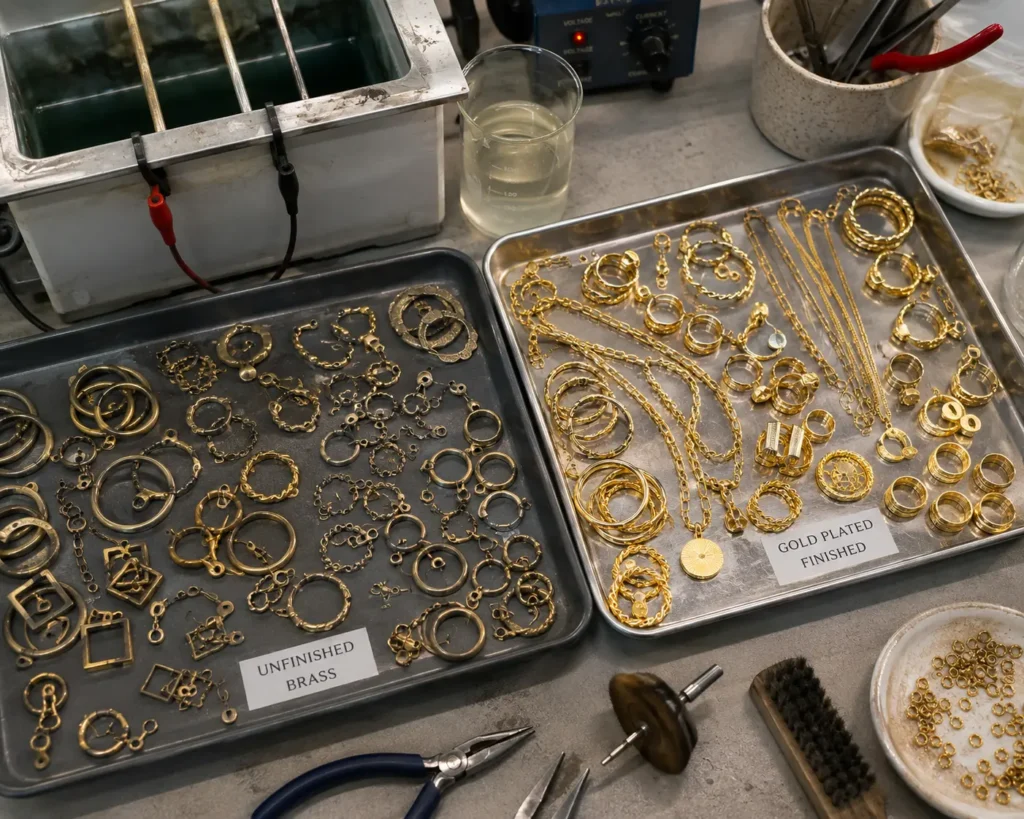
Sourcing solid gold jewellery means working with suppliers who deal in a regulated, high-value commodity, with lead times and minimum order quantities shaped by the cost of the raw material itself. Gold plated jewellery removes most of that friction. Because the base metal is inexpensive and widely available, you can order smaller production runs, test new designs faster, and iterate on styles without the capital lockup that a solid gold minimum order requires.
That flexibility matters enormously for a Series A team that needs to move fast on trend cycles — a gold plated jewellery style can go from concept to storefront in weeks, get tested against real demand, and get killed or scaled based on actual sales data rather than a guess made six months earlier when the production order was placed.
This same flexibility extends to your supplier relationships. Electroplating is a widely available manufacturing process, so you’re not locked into a small pool of specialized solid-gold manufacturers with long relationships and long lead times. A broader supplier base means better negotiating leverage, more redundancy if one supplier has capacity issues, and a shorter path to launching gold plated jewellery in a new market or category without renegotiating your entire sourcing strategy from scratch.
Gold plated jewellery gives a Series A brand the look, the margin, and the repeat-purchase mechanics of a premium product without the capital risk of holding real gold on the balance sheet. Build your first catalog around it, and you’ll have a growth engine that scales on data instead of guesswork.
Resources
1.Jewellery plating guidehttps://www.ganoksin.com/article/jewelry-plating
2.Gold plating basicshttps://www.ganoksin.com/article/gold-plating/