

Fashion jewellery ships light, costs pennies to produce, and turns a browser into a repeat buyer faster than almost any other physical product category — which is exactly why it deserves a line item in your Series A roadmap even if you think you’re building software.
Fashion Jewellery Is the Fastest Path to Positive Unit Economics for a Consumer Brand
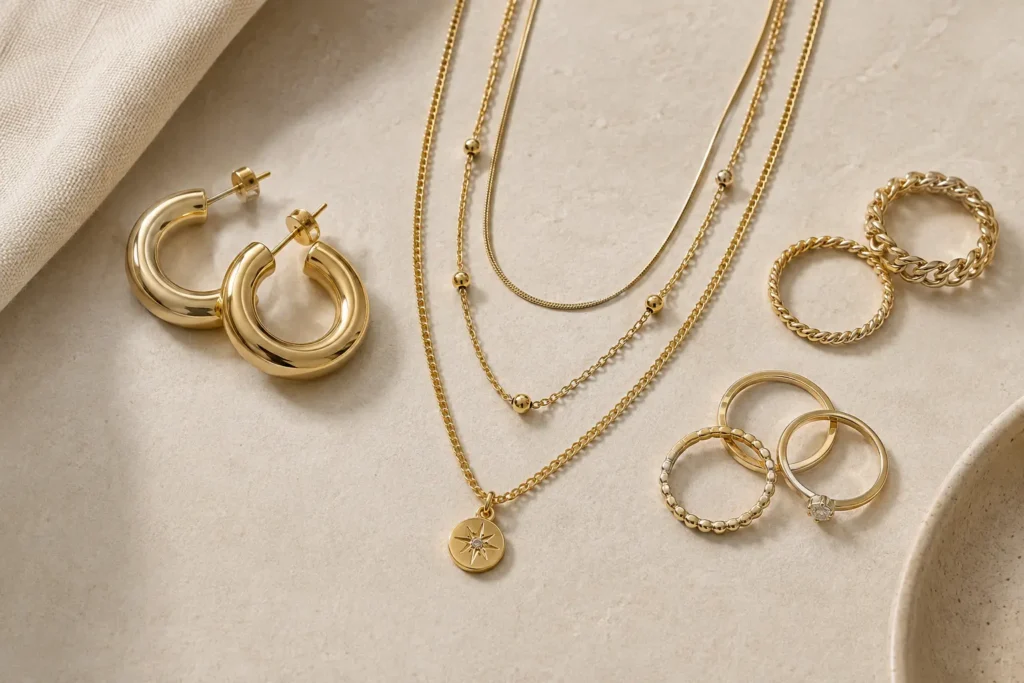
The Unit Economics Beat Almost Every Other Physical SKU
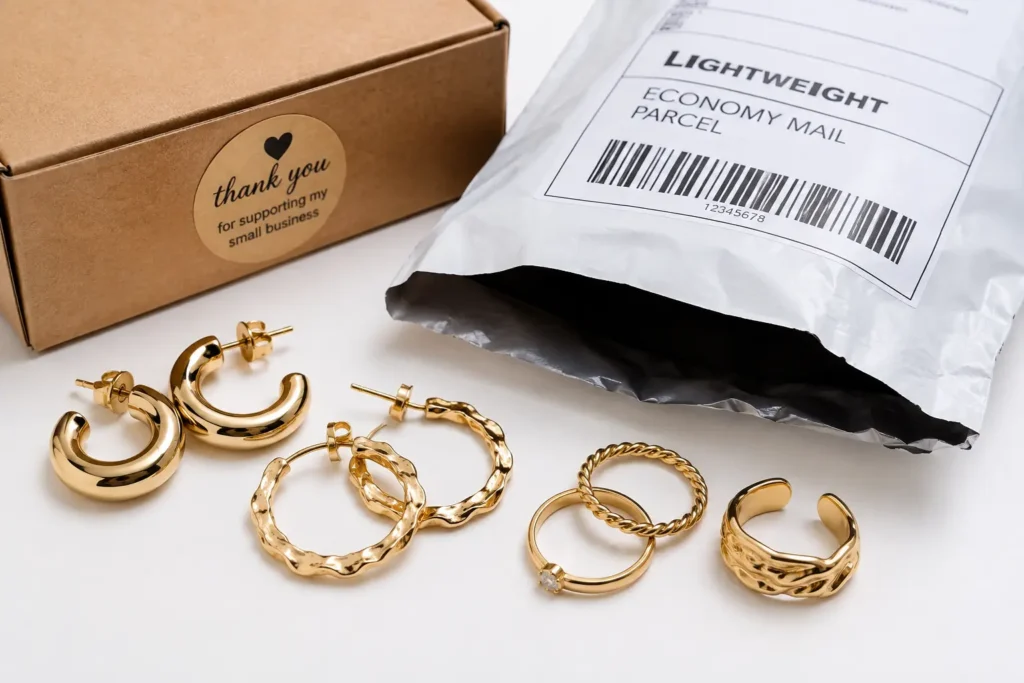
Founders evaluating a consumer hardware or merch line usually run the same math: production cost, shipping weight, return rate, and margin. Fashion jewellery wins on all four. A pair of earrings or a stack of rings weighs grams, not pounds, so shipping cost stays flat whether you’re sending one unit or five. Base materials — brass, zinc alloy, plated metals, resin — cost a fraction of what fine jewellery (gold, diamonds) or electronics require, which is why brands like BaubleBar and Kendra Scott built scaled DTC businesses on fashion jewellery specifically, not fine jewellery, as their entry category.
Return rates also run lower than apparel, because fit isn’t the variable — style and finish are, and both are easy to represent accurately in product photography For a technical founder used to thinking in gross margin percentage, fashion jewellery routinely clears the bar that footwear, apparel, and electronics struggle to hit.
Compare it to the alternative categories founders usually shortlist. Branded apparel needs a size grid, higher fabric and cut-and-sew costs, and a return process that eats into margin every time a customer guesses wrong on fit. Consumer electronics need certification, firmware support, and a warranty program before you ship a single unit. Fashion jewellery needs none of that. You design a piece, source plating and a base alloy, and ship a finished product that doesn’t degrade, doesn’t require a manual, and doesn’t trigger a support ticket six months later. That’s a materially shorter path from prototype to shelf than almost any other physical category a Series A team could pick.
It’s a Low-Risk Test Bed for Your Growth Engine

Series A founders don’t have unlimited runway to test acquisition channels, and fashion jewellery gives you a cheap, fast feedback loop for exactly that. Average order values sit low enough that paid social and influencer partnerships can run at a profitable CAC-to-LTV ratio even before you’ve built a large repeat-purchase base. Pura Vida built its entire growth story on this mechanic: low price point, high visual shareability, and a product that photographs well in a single frame — three things that make paid creative and organic UGC cheaper to produce and cheaper to test.
If you’re trying to validate a growth channel before committing serious budget to it, fashion jewellery lets you run that experiment with less capital at risk than almost any other category, and the lessons — creative that converts, audiences that respond, retention hooks that work — transfer directly to higher-ticket product lines you add later.
Inventory and SKU Complexity Stay Manageable
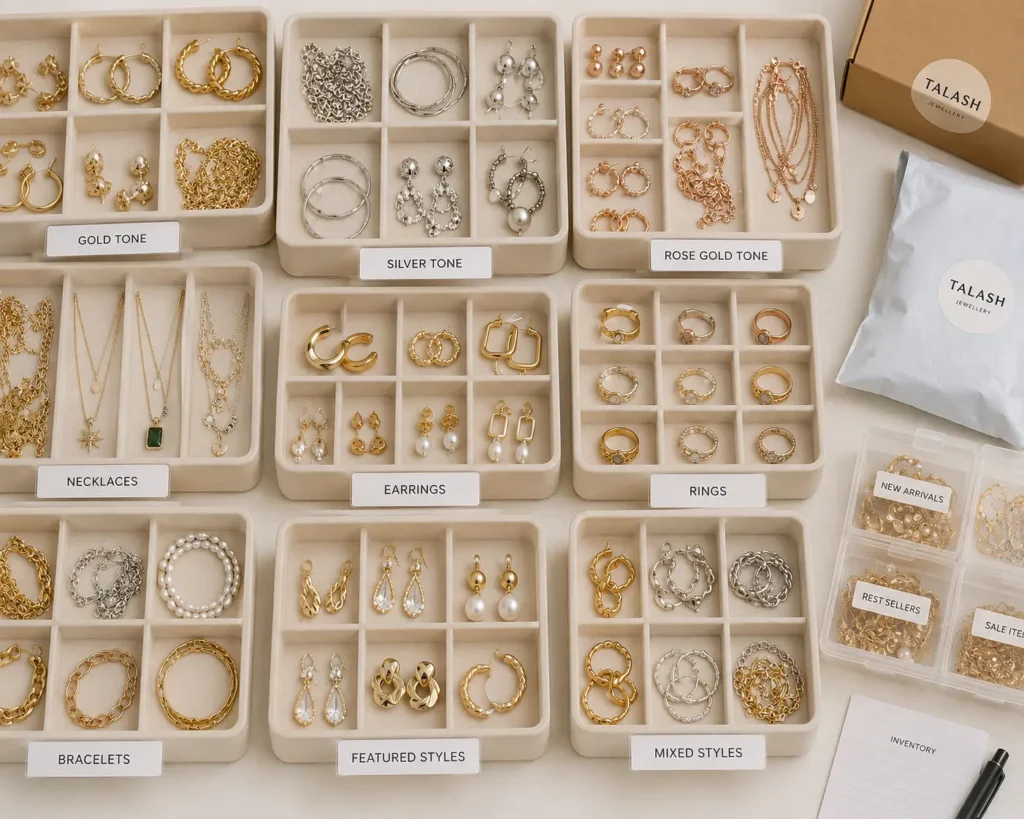
Technical founders instinctively distrust inventory-heavy businesses because SKU sprawl kills margin and complicates forecasting. Fashion jewellery keeps that complexity contained in a way apparel never does. There’s no size run to stock — no small, medium, large, extra-large multiplied across every colorway.
A single design might ship in two or three finishes (gold-tone, silver-tone, rose-gold-tone), and that’s typically the full variant matrix. This means a lean team can manage a catalog of hundreds of styles without the warehousing and demand-forecasting overhead that apparel or footwear brands need entire ops teams to handle. For a Series A company still running operations with a skeleton crew, that’s the difference between a product line you can actually execute and one that quietly drains headcount you don’t have.
The lead times reinforce the same advantage. Sourcing a new fashion jewellery style typically moves faster than sourcing a new apparel style, because there’s no pattern-making, no fabric sourcing, and no fit sample cycle to run through before you commit to a production order. A founder can go from concept sketch to sellable sample in weeks, test it against real demand, and kill or scale it before a comparable apparel style has even finished its first fit round. That speed lets a lean team ship a wider range of fashion jewellery designs per quarter than they could manage in almost any other physical category, without adding a single person to the operations team.
The Data Layer Compounds Faster Than You’d Expect

Fashion jewellery purchases are frequent, impulsive, and tied closely to occasions — a birthday, a new outfit, a gift — which means the purchase cycle is short enough to generate usable behavioral data within months, not years. That data — what style pairs with what, which price points trigger add-to-cart versus which stall at checkout, which finishes get returned — becomes a genuine asset for a technical team that knows what to do with it. Brands that treat fashion jewellery as a data-generating category, not just a revenue line, end up with a recommendation engine and a merchandising model that’s hard for slower competitors to copy.
Resources
1.: E-commerce marketing strategieshttps://www.shopify.com/blog/ecommerce-marketing
2.Website analytics and customer insightshttps://support.google.com/analytics/