
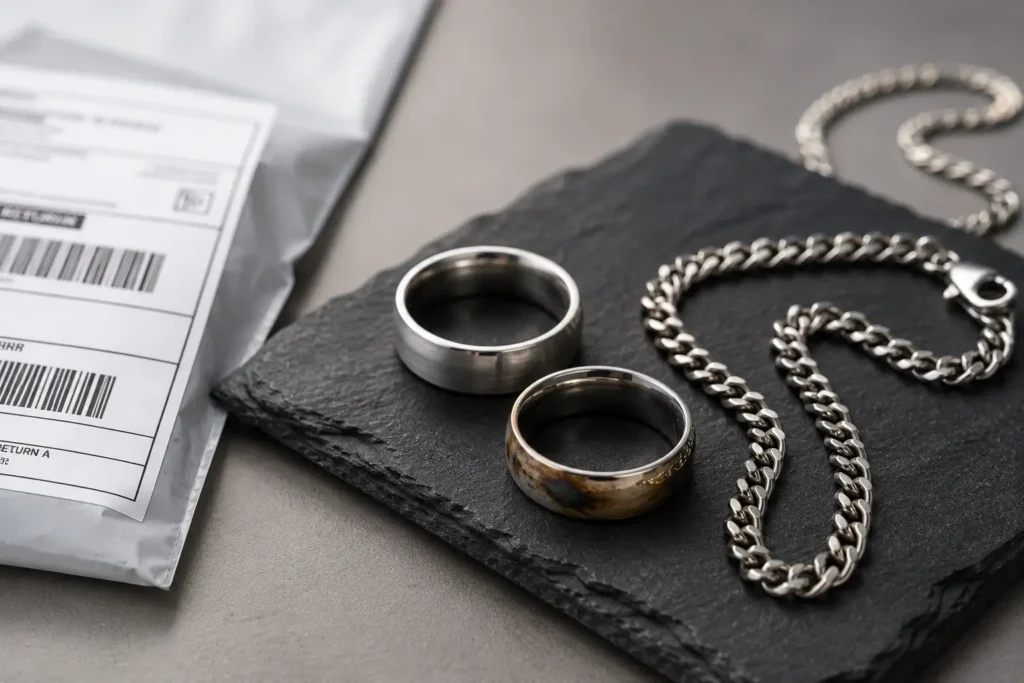
Anti Tarnished Jewellery Isn’t a Nice-to-Have — It’s a Unit Economics Decision
A single tarnish complaint costs more than the piece of jewellery that caused it, and most Series A founders discover this only after the return queue backs up.
The Return-Rate Problem Anti Tarnished Jewellery Actually Solves
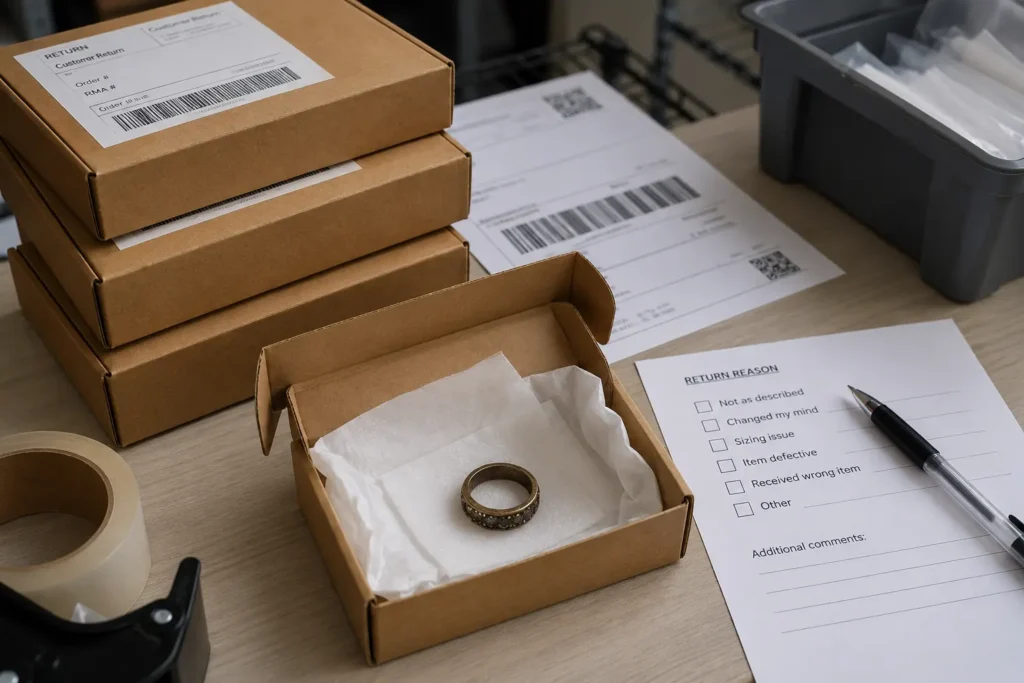
Founders running a DTC jewellery brand treat returns like a customer service metric. They aren’t. Every returned item drags three costs at once: the reverse shipping label, the restocking labor, and the marketing spend that acquired the customer in the first place. Standard plated jewellery oxidizes within weeks of contact with sweat, perfume, or humid air, and the resulting green tint or dulled shine triggers a refund request that no support script fixes. Anti tarnished jewellery changes the shape of that curve.
Because the metal resists oxidation at the surface layer, the return trigger simply doesn’t fire as often. A founder evaluating suppliers doesn’t need a lab report to see this — a 90-day cohort of orders split between standard-plated and anti tarnished jewellery, tracked by return reason code, tells the story in one dashboard.
This matters most for founders who’ve already proven demand and are now optimizing gross margin ahead of a Series B raise. Investors don’t ask “do customers like the product.” They ask “why does the return rate keep eating the contribution margin.” Anti tarnished jewellery answers that question with a supply chain choice rather than a customer service hire.
Material Science Founders Can Explain to Investors
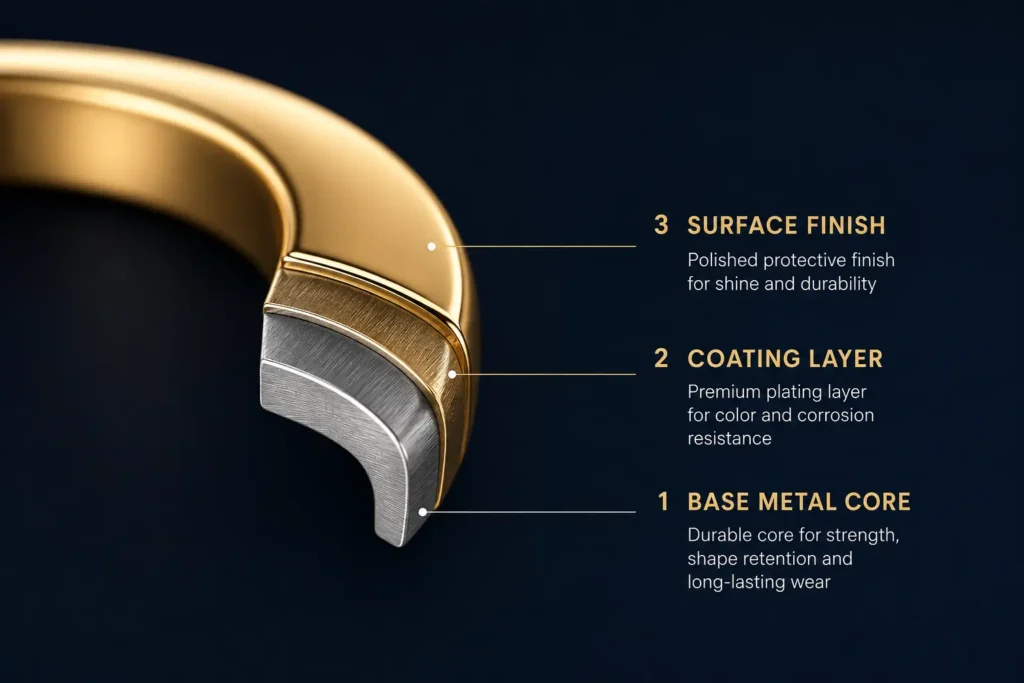
You don’t need a materials engineering degree to defend this decision in a board meeting, but you do need to know what you’re buying. Tarnish is an oxidation reaction — base metals like copper, brass, or silver react with sulfur compounds and moisture in the air, forming a visible layer of corrosion. Anti tarnished jewellery interrupts that reaction in one of three ways: a rhodium or PVD (physical vapor deposition) coating that seals the base metal from air contact, a stainless steel or titanium base that resists oxidation without any coating at all, or a solid gold or solid silver construction where the tarnish-prone alloy content is reduced from the start.
Each method has a different cost curve and a different failure mode, and a founder who can name that trade-off in a supplier call negotiates from a stronger position. PVD coating is cheap per unit but wears down with friction over months. Stainless steel costs more upfront but holds its finish indefinitely under normal wear. Solid gold costs the most but never needed anti-tarnish treatment in the first place because the alloy itself resists corrosion. None of this is exotic chemistry — it’s the same logic a hardware founder applies when choosing a coating for a connector pin, and framing it that way tends to land better with a technical board.
The Supply Chain Math: Coating vs. Solid Metal
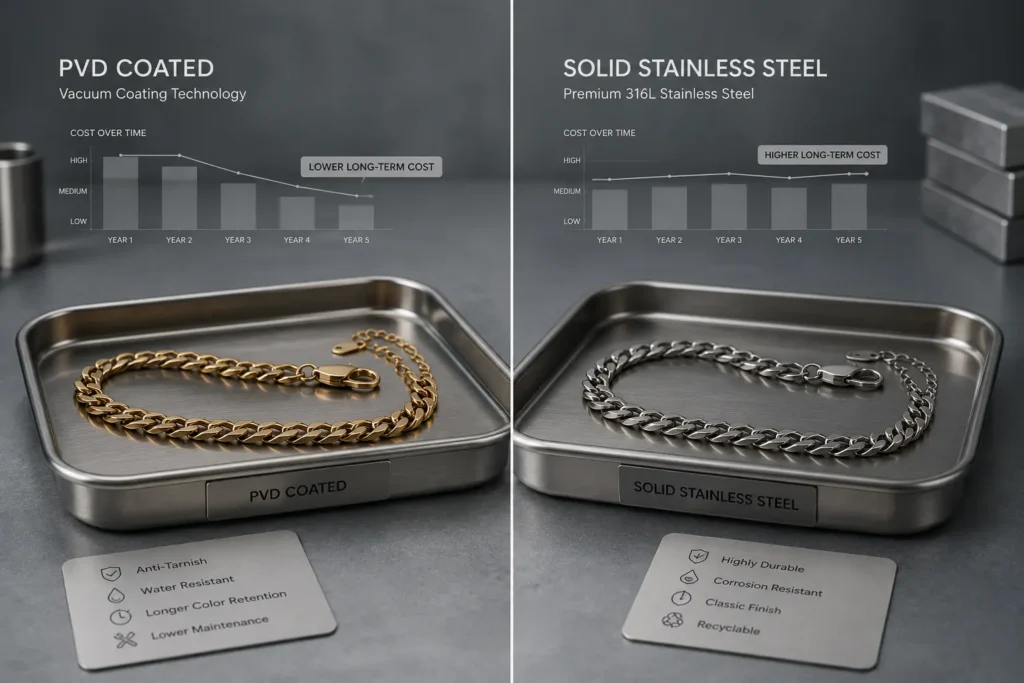
Run the numbers the way you’d run a build-vs-buy decision for infrastructure. PVD-coated anti tarnished jewellery typically adds a small percentage to per-unit manufacturing cost over untreated plated pieces, but it cuts the tarnish-related return category almost entirely for the coating’s effective lifespan. Stainless steel or titanium anti tarnished jewellery costs more per unit at the factory but removes the coating variable altogether — there’s no wear-down date to plan around, no batch-to-batch coating thickness variance to audit, and no need to renegotiate with a plating vendor every time a batch fails QA.
The founders who get this wrong usually make the mistake of comparing landed cost per unit in isolation, the same trap SaaS founders fall into when they compare license cost without factoring in support burden. Add the full cost stack — return shipping, refund processing, customer support hours, and the marketing spend wasted on customers who churn after one tarnished piece — and anti tarnished jewellery wins the margin argument even at a higher unit cost. A founder building the P&L for a fundraise deck should run this comparison at the SKU level, not the category level, because tarnish resistance matters more for pieces with constant skin contact (rings, everyday chains) than for occasional-wear pieces (statement earrings).
Customer Retention Signals That Matter More Than Reviews
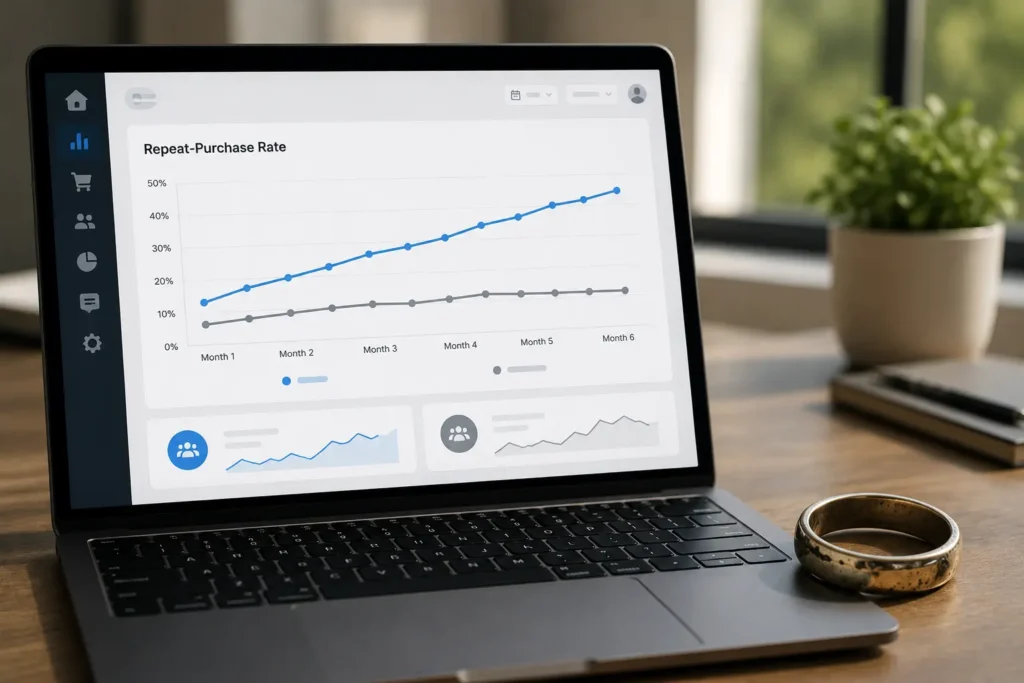
Star ratings lag reality by weeks — a customer leaves a five-star review the day the package arrives, then discovers tarnish three weeks later and never updates it. The signal a founder should actually track is repeat purchase rate segmented by product tarnish-resistance tier. Anti tarnished jewellery customers who buy a second piece within 60 days demonstrate something a review can’t: the first piece survived daily wear well enough to earn trust for a second purchase.
This retention signal compounds. A customer who trusts the material stops price-comparing against fast-fashion jewellery competitors and starts treating the brand as a default, which lowers customer acquisition cost on every subsequent order because a share of revenue now comes from repeat buyers rather than fresh ad spend. Founders who track lifetime value by original acquisition channel often miss this because they don’t split by material tier — once you segment anti tarnished jewellery buyers separately, the LTV curve typically separates from the standard-plated cohort within the first two purchase cycles, and that separation is the actual ROI case, not the marketing copy on the product page.
Closing
Anti tarnished jewellery moves the tarnish problem out of the support queue and into the supply chain, where a founder can actually price it, forecast it, and defend it in a board deck. Choose the metal treatment the way you’d choose any infrastructure vendor — on total cost
Resource
1.Jewelry care and cleaning tipshttps://www.gia.edu/jewelry-care-cleaning
2.Gemstone jewelry cleaning guidehttps://www.gemsociety.org/article/clean-gemstone-jewelry/